
Guides
Longer explanations for the questions the charts raise: how tap drills are worked out, why 75% thread, how deep to drill a blind hole, which tap to use, and how to size pilot holes in wood.
All guides
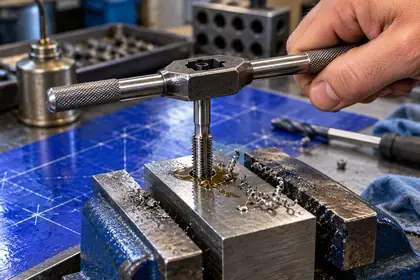
How to tap a hole by handDrill, chamfer, start square, cut, clear chips: the full routine.→
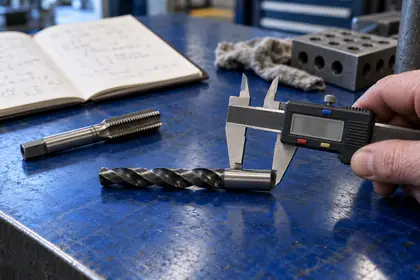
How to calculate tap drill sizeThe 0.01299 formula, diameter minus pitch, and why the hole beats the drill.→
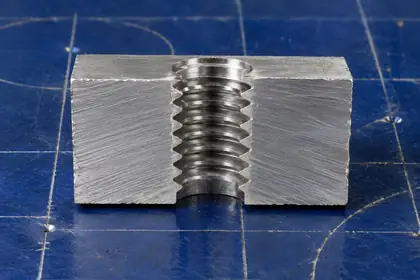
Thread percentage explained: why 75%Why 75% is the norm, when to go lower, and when you can't.→
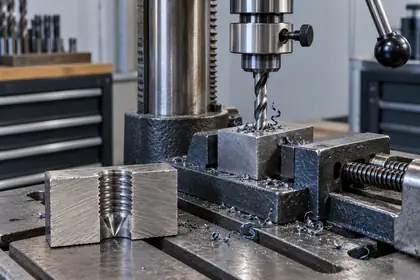
Blind holes: how deep to drill before tappingThread depth, tap chamfer, one pitch and the drill point, added up.→
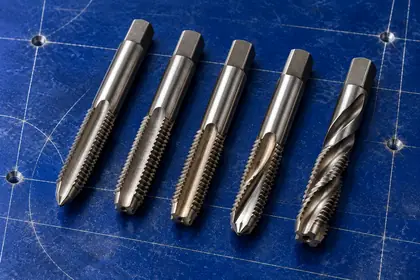
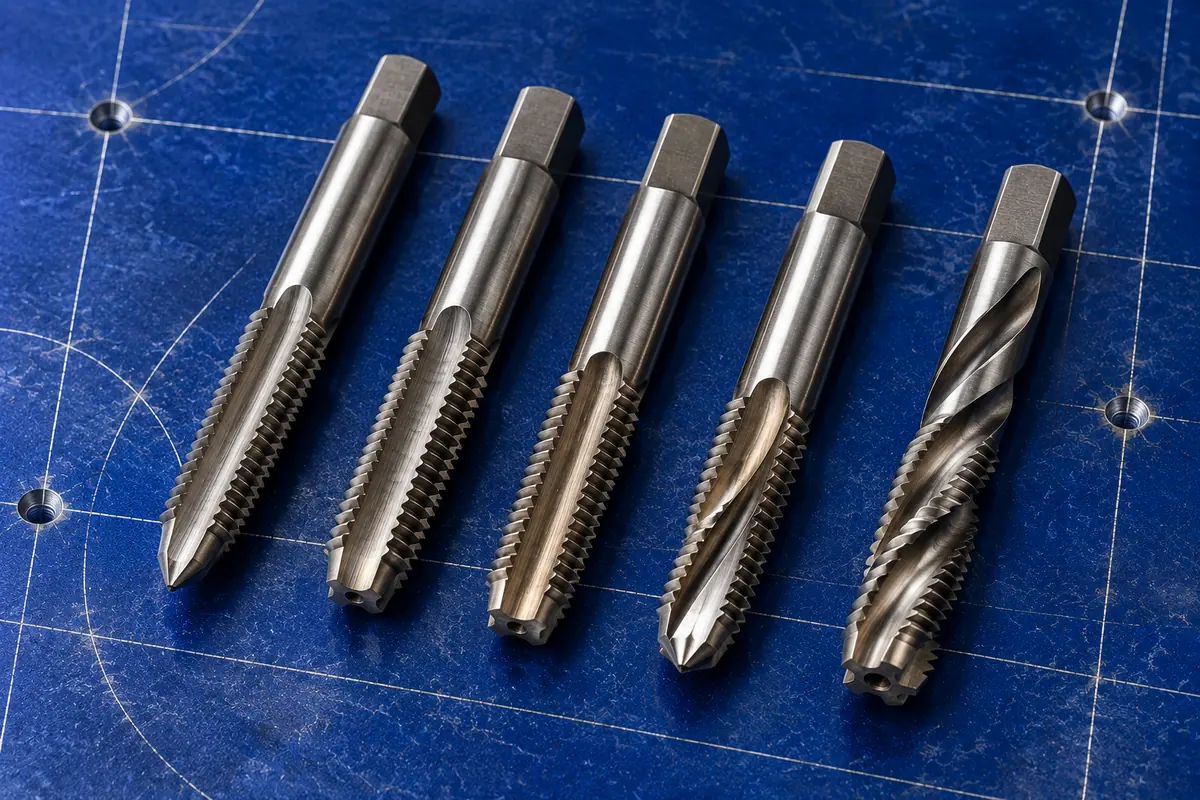
Taper, plug and bottoming taps (and spiral point vs spiral flute)Which tap starts the hole, which finishes it, and where the chips go.→
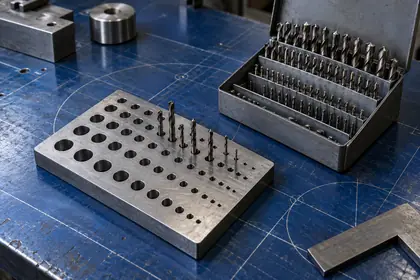
Number, letter, fractional and metric drill sizes explainedWhy a #7 is smaller than a #1, where letters start, and which set to buy.→
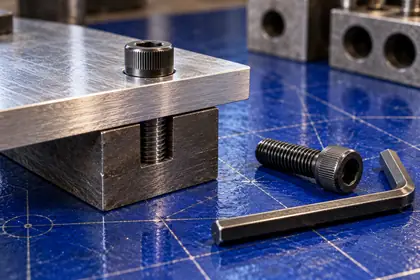
Clearance holes: close, normal and loose fitThe hole a screw passes through, by standard and by shop chart.→
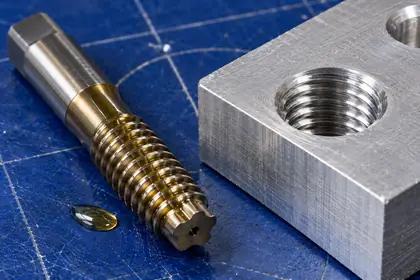
Thread forming taps: what drill size to useForming taps need a much bigger hole. Here is the formula and why.→
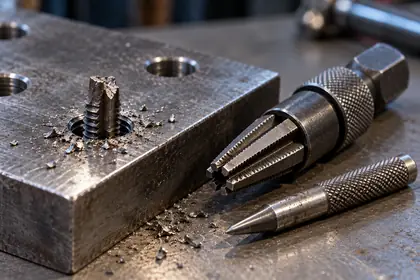
How to remove a broken tapExtractor, punch, carbide, EDM or alum: which method fits your part.→
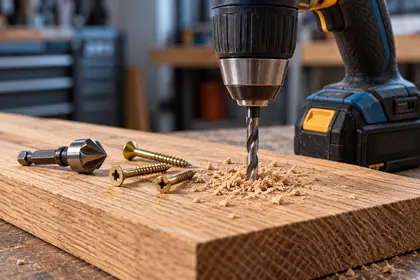
Pilot holes for wood screws: how to size themSize the pilot to the core, not the threads, and let the top board go free.→
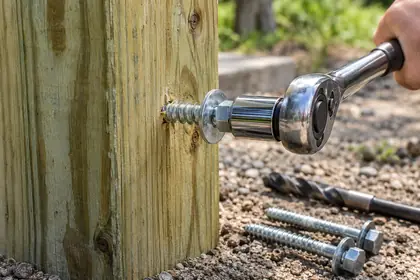
Lag screw pilot holes: the two-hole methodTwo holes, sized by wood density. The Wood Handbook method, worked out.→
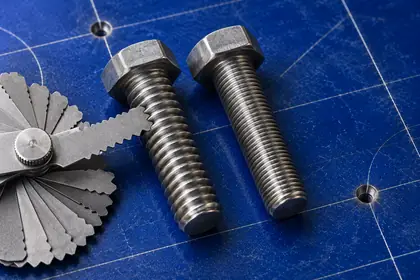
UNC vs UNF, and how to read a thread calloutCoarse vs fine, thread classes, and what 1/4-20 UNC-2A actually says.→
How these guides are written
Each guide is researched from tool makers' technical data, standards summaries and government and university references, and every factual claim links to its source at the foot of the page. Worked examples are calculated, then checked against published charts. The editorial policy has the details, and corrections are welcome at [email protected].