
Pilot hole sizes
The drill for wood screws #2 to #14 and lag screws 1/4 to 3/4 in, in hardwood and softwood, with the shank clearance hole for each.
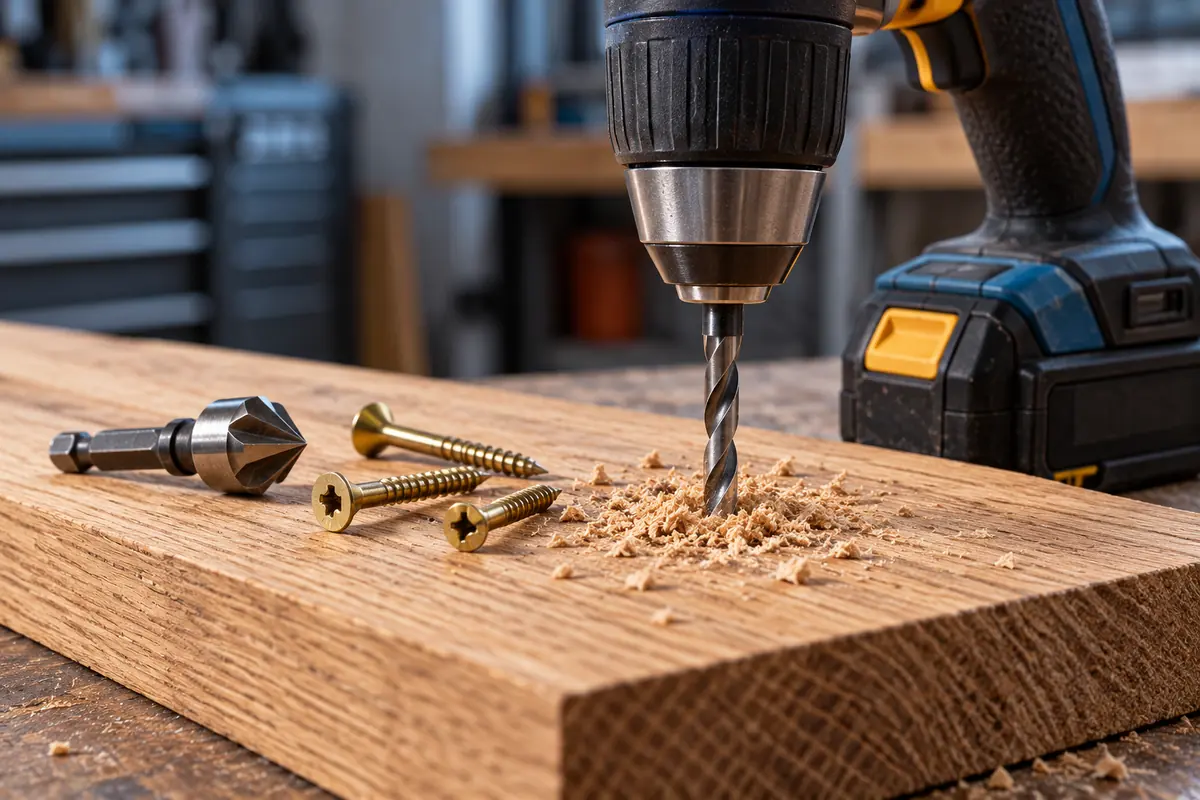
Why pilot holes matter
A screw pushes wood fibers aside as it goes in. Without a pilot hole, dense wood resists hard enough to snap small screws, and any wood can split near an end or edge. Too large a pilot and the threads have nothing to grip.
The right pilot is sized to the screw's core, the solid part inside the threads. The USDA Wood Handbook bases its holding figures on pilots of about 70% of that core diameter in softwood and about 90% in hardwood (USDA Forest Products Laboratory, Wood Handbook (2021), ch. 8). Shop charts, including the sizes here, round to the nearest common bit.
Lag screws follow a different rule, set as a percentage of the shank diameter by wood density. Their pages work it out for pine, Douglas fir and oak. For the reasoning behind both, read the wood screw guide and the lag screw guide.