
What size drill bit do I need?
Pick the thread you are tapping or the screw you are driving. You get the drill, a substitute if that bit is not in your set, and a page with everything else you need for the hole.
1/4-20 tap drill#70.2010 in, 5.11 mmSee the full page
Most looked-up sizes
 Tap drill sizes109 inch, metric and pipe threads›PILOT
 Pilot holesWood screws and lag screws›CHARTS
 Printable chartsSeven charts for the shop wall›GUIDES
 GuidesHow and why, with sources›CBORE
 CounterboresSocket head cap screws, inch and metric›CALC
 CalculatorAny thread, both ways, with a gauge check›CLEARClearance holesClose, normal and loose fit›PIPENPT pipe threadsDrills with and without a reamer›
Guides
View all guides →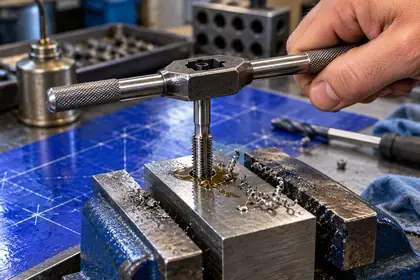
How we check every size
CalculatedEach drill is worked out from the thread's diameter and pitch with the tap makers' formula.Cross-checkedThen compared with independent published charts, usually two.Disagreements shownWhere charts differ, the page gives both values and why we chose one.Sources listedGuides cite their sources, and the editorial policy explains the method.Finding the right tap drill
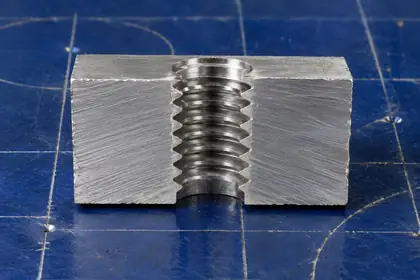
A tap cuts its thread into the wall of a hole, so the hole has to be smaller than the screw. How much smaller decides how deep the thread is. Charts aim for about 75% of a full thread, which holds nearly as well as a full thread and is far easier on the tap.
For inch threads, read the size as diameter and threads per inch: 1/4-20 is a quarter-inch screw with 20 threads per inch, and its tap drill is a #7. For metric, subtract the pitch from the diameter: M6 x 1 takes a 5 mm drill. The calculator handles anything that isn't on a chart.
Pilot holes for screws
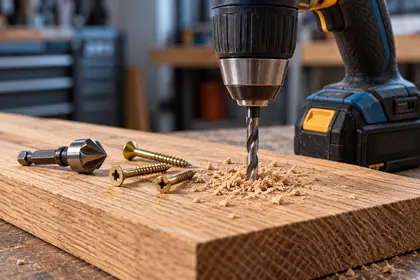
Wood screws need a pilot hole sized to the solid core inside the threads, larger in dense hardwood than in pine. Lag screws need two holes: one for the threads and a full-size one for the smooth shank. Each screw's page gives the sizes and the reasoning.
If you are new to this, start with how to tap a hole by hand or pilot holes for wood screws.